
eNews January 2026
January 27, 2026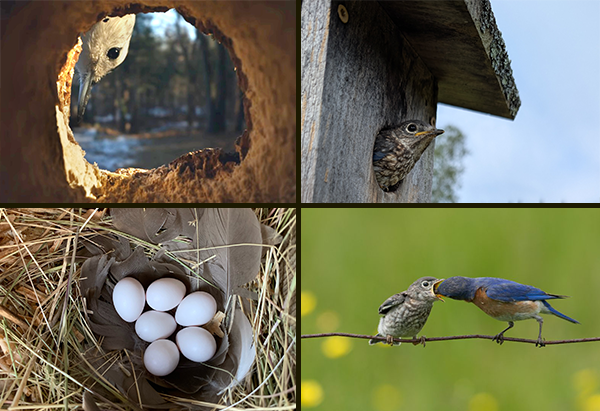
January 2026 eNews
Woodpecker Holes, Community Homes
In a forest, woodpecker holes are a valuable commodity. Many forest birds like titmice, nuthatches, and bluebirds make their homes in tree cavities—even though they can’t make the holes themselves. That’s why you’ll often see birds pausing in their daily routine to peer inside a tree cavity even in the winter—they’re browsing the local real estate.
If you’ve ever wanted to see this behavior from the tree’s perspective, check out this short videofrom the Cornell Lab’s new series, Backyard Birds Revealed. Then, tune in to a special chat with wildlife photographers Tim and Russell Laman on Feb. 24 at 1pm ET/10am PT. Register for the free live event here.
Open Dataset Refresh
The full NestWatch dataset is available for download from the NestWatch website making your observations accessible to researchers or anyone interested in learning more about nesting birds. Each January, we update the files to include the previous year’s data. NestWatch data submitted in 2025 is now included in this dataset, which brings the total to 860,226 nest records.
New NestWatch Chapters
Our newest NestWatch Chapters are Van der Brohe Arboretum in WI and Mercer University Bluebird Research Group in GA. Welcome!
Data Influx
Thanks to Evergreen Audubon (Colorado), we were able to upload 169 new nest records to our database this past month. Do you have a lot of data to share? We can help!
NestWatch Tip of the Month
If you have historic data you’ve collected for a project, for research, or for your degree, consider adding it to the NestWatch database! We store your data safely and securely so that you have access in perpetuity, and the data can be put to use to help inform our understanding of breeding birds. Send us an email to learn more: nestwatch@cornell.edu.
Submission of the Month
Submission of the Month
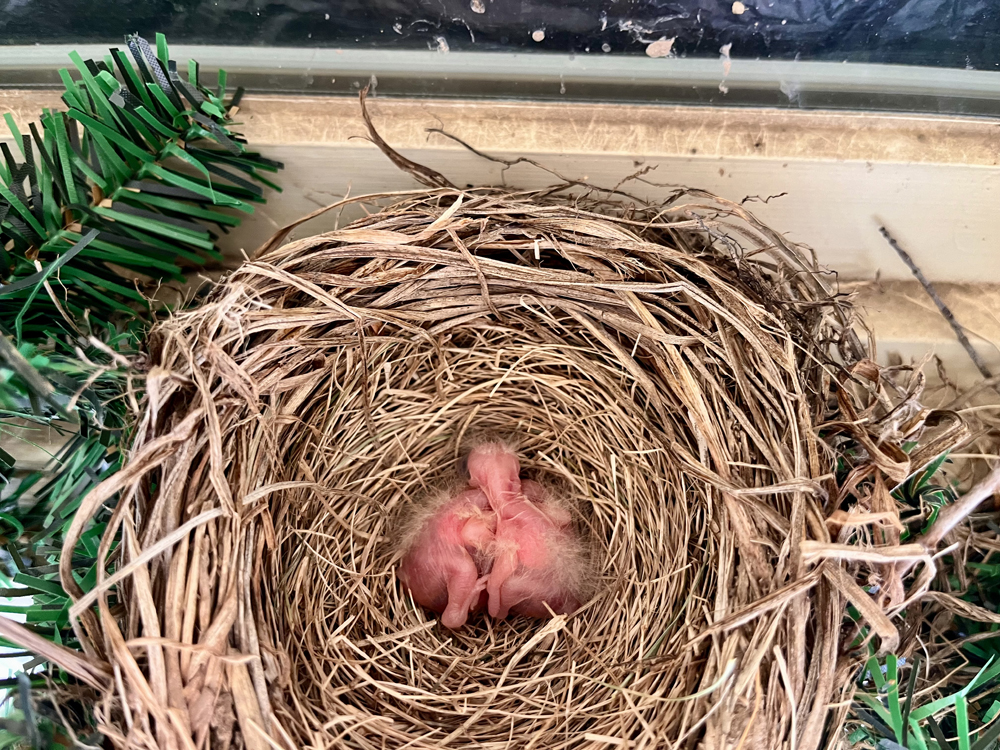
Jackie Jones, of Virginia, sent us this photo of an American Robin nesting on a ledge above her front door! The eggs successfully hatched in early January, making these the first reported hatchlings in North America of 2026!
Want a chance to be featured here? Be sure to submit photos with your nest visit data.