
Protective Nesting Associations: the predator next door
March 12, 2026by Robyn Bailey, NestWatch project leader
You might think that a nesting bird would want to be as far away from a predator as it could get and, generally speaking, that’s true. However, it could be very strategic to nest near a predator that is two or more steps above you in the food chain (i.e., your predators’ predator). In this way, some birds gain protection from larger, more aggressive species that keep generalist predators at bay. Similarly, some birds have adapted to nest alongside invertebrates with ferocious bites or stings, like wasps and ants, in an effort to stay out of reach of terrestrial predators. This relationship is called a protective nesting association. Here are three of our favorite examples of unwitting nest protectors.
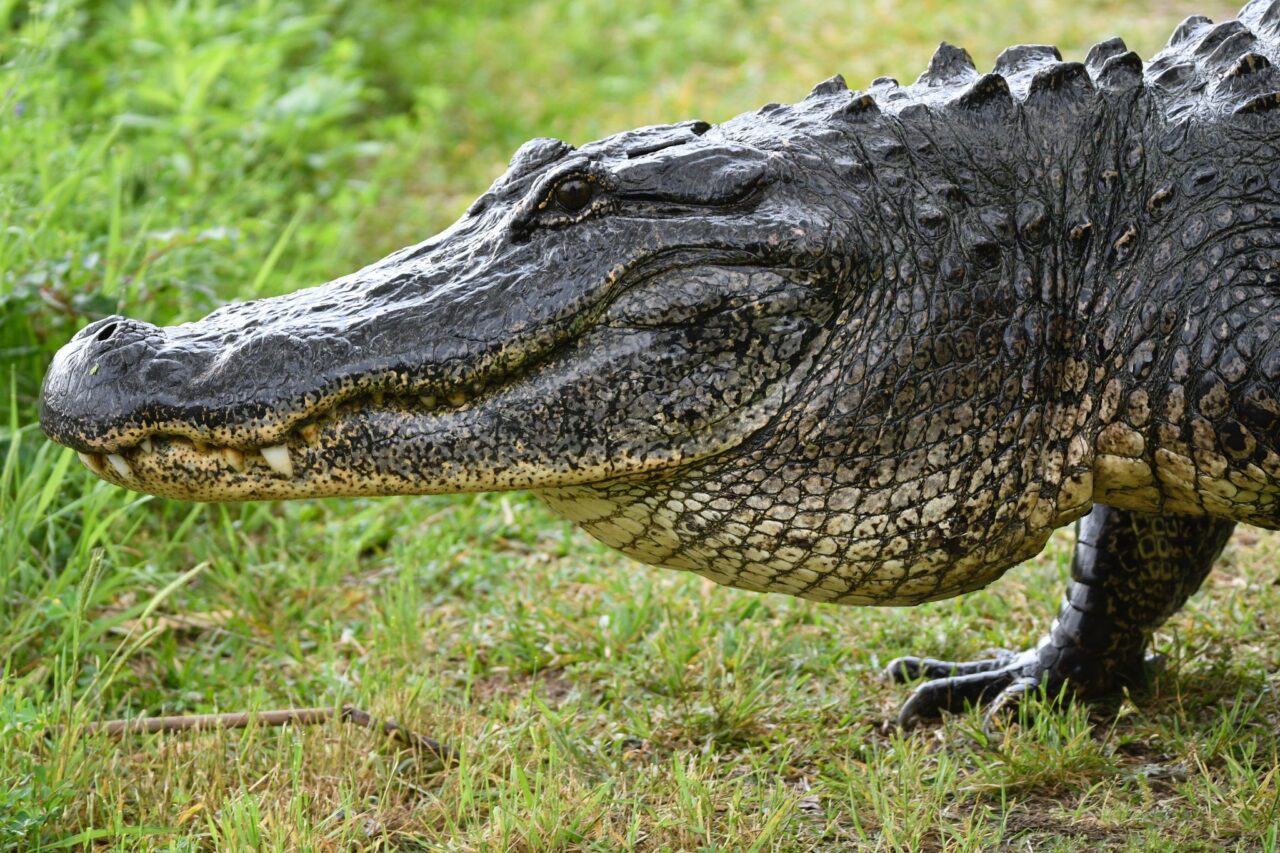
Protection from Below
Nests built in the trees above alligator-infested waters seem to be protected from predators like opossums and raccoons.
Alligators and Wading Birds
In the southeastern United States, researchers found that wading birds such as herons, egrets, ibises, storks, and spoonbills appear to seek out alligator-inhabited waters above which they can nest (Nell et al. 2016). The alligators keep away (or eat) nest predators such as opossums and raccoons, and they cannot climb trees to rob nests themselves. However, the alligators certainly claim any chicks that fall out of the nests from time to time, making it likely that they are also benefiting from their avian neighbors.
Hawks and Hummingbirds
Black-chinned Hummingbirds nesting in southeastern Arizona were found to cluster their nests around the nests of Northern Goshawks and Cooper’s Hawks. Both species of hawk prey on birds, but would not normally bother with something as small as a hummingbird. Greeney and Wethington (2009) found that hummers that nested within 300 meters of the hawks were much more likely to successfully raise young than those that nested farther away.
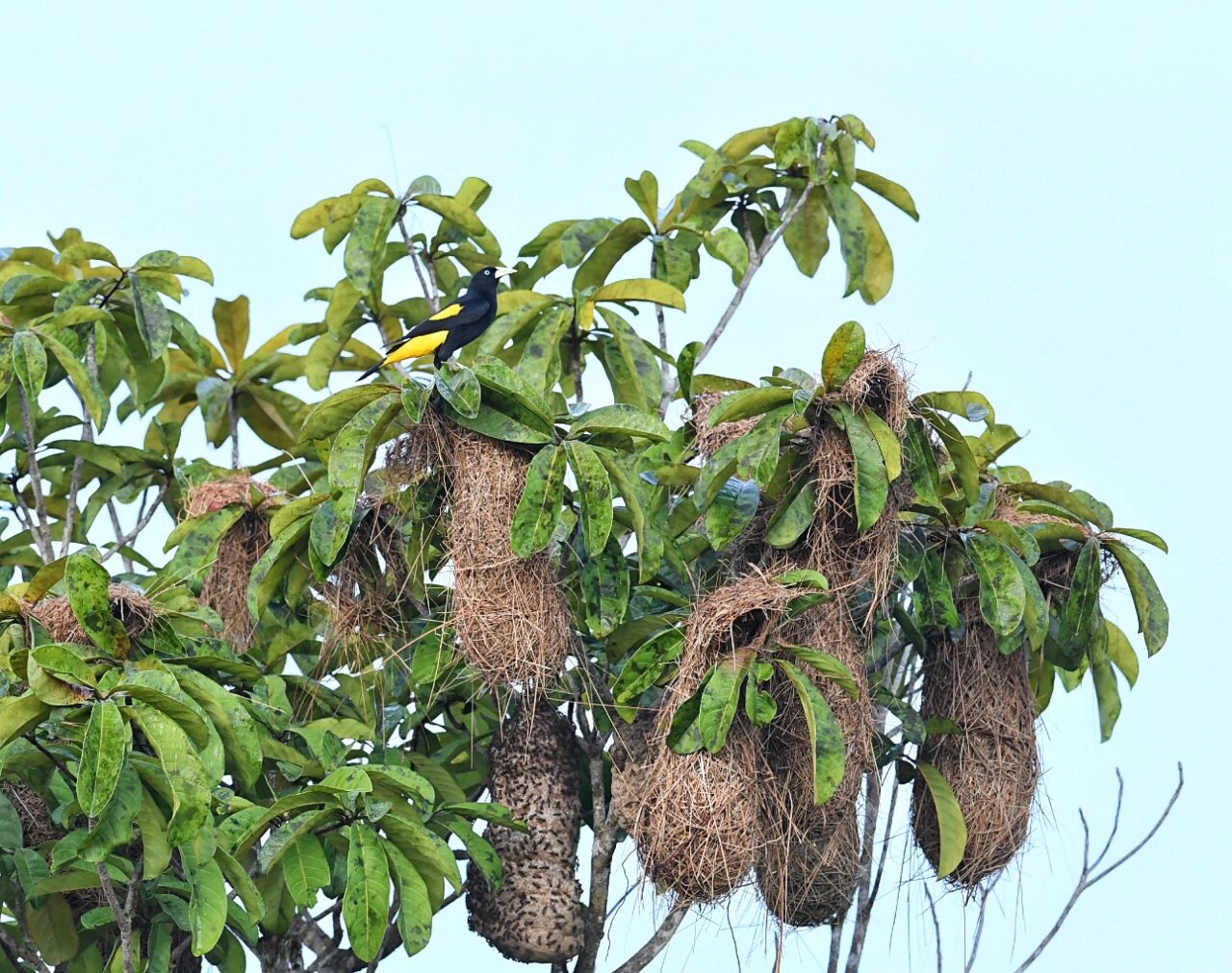
Nests Protected By Wasps
This Yellow-rumped Cacique colony is taking advantage of the nest-protecting behaviors of their wasp neighbors (bottom center).
Wasps and Caciques
Caciques nest in South America in and around the Amazon rainforest. Yellow-rumped Caciques nest in small colonies and will often locate these colonies near wasp nests. This behavior is thought to keep them safe from arboreal mammals such as primates, which destroy many more-accessible nesting colonies (Robinson 1985, 1986). The caciques make sure there is enough space between their nests and these wasps too, lest they incite an attack!
The Enemy of My Enemy is My Friend
At least 92 protective nesting associations have been documented so far (Quinn and Ueta 2008). It’s unclear whether the recipients of the protection always seek out these “protectors,” or if they are simply recognizing that an area has fewer nest predators. Either way, it can pay off to have a formidable carnivore or an army of aggressive insects for a neighbor…as long as you fly under the radar.
References:
- Greeney, H. F., and S. M. Wethington. 2009. Proximity to active Accipiter nests reduces nest predation of black-chinned hummingbirds. Wilson Journal of Ornithology 121:809–812.
- Nell, L. A., P. C. Frederick, F. J. Mazzotti, K. A. Vliet, and L. A. Brandt. 2016. Presence of breeding birds improves body condition for a crocodilian nest protector. PLoS ONE 11(3):e0149572.
- Quinn, J. L., and M. Ueta. 2008. Protective nesting associations in birds. Ibis 150:146–167.
- Robinson, S. K. 1985. Coloniality in the yellow-rumped cacique as a defense against nest predators. Auk 102:506–519.
- Robinson, S. K. 1986. Three-speed foraging during the breeding cycle of yellow-rumped caciques (Icterinae: Cacicus cela). Ecology 67:394–405.