
Join Our New Study on Plastics in Bird Nests
April 9, 2026by NestWatch staff
Have you ever seen a piece of a plastic grocery bag woven into a robin’s nest? Or perhaps a section of fishing line woven into the lining of a catbird nest? Increasingly, birds are integrating anthropogenic materials into their nests—but does using these materials matter? Plastic items may pose an entanglement risk, or they may make certain nests more visible to predators. On the other hand, there may be some benefits that are influencing birds’ selection of these materials. You can help us investigate potential relationships between plastics in nests and reproductive success.
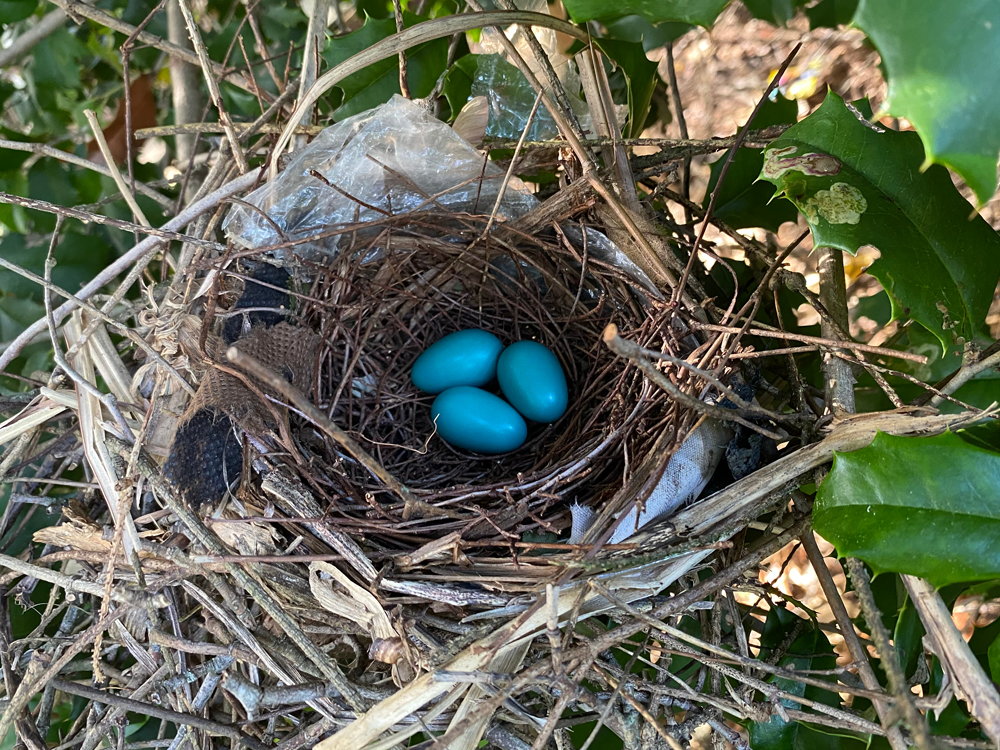
Example: Top-view
A top-view photo of a Gray Catbird nest. Top-view photos will allow researchers to detect plastics in the cup lining.
The NestWatch team and Cornell University student Will Cawley are teaming up to measure the potential impacts of plastics in nests this summer. We’re asking all NestWatch participants who find the nest of an American Robin, Gray Catbird, or Northern Mockingbird to photograph that nest and upload the images when reporting data to NestWatch. We’re looking for nests with plastic as well as plastic-free nests. Our team will review the photos to determine the presence or absence of plastics, and compare nesting success between nests with and without plastic.
Participating is easy. We ask that if you find a nest of these species, you take at least two photos and upload those images into NestWatch. We’re looking for at least one photo from the side of the nest, and one from above (see photos for examples). Note that we should always minimize disturbance and time at the nest, so if it’s not possible to take the photos quickly and without disturbing surrounding vegetation, it’s fine to skip the photos.
Pro tip: While we appreciate photos of old nests, we’re really looking to link the presence of plastic with the outcomes of nests tracked through NestWatch. To participate in this special study, we ask that you both photograph active nests AND track them in NestWatch until their conclusion.
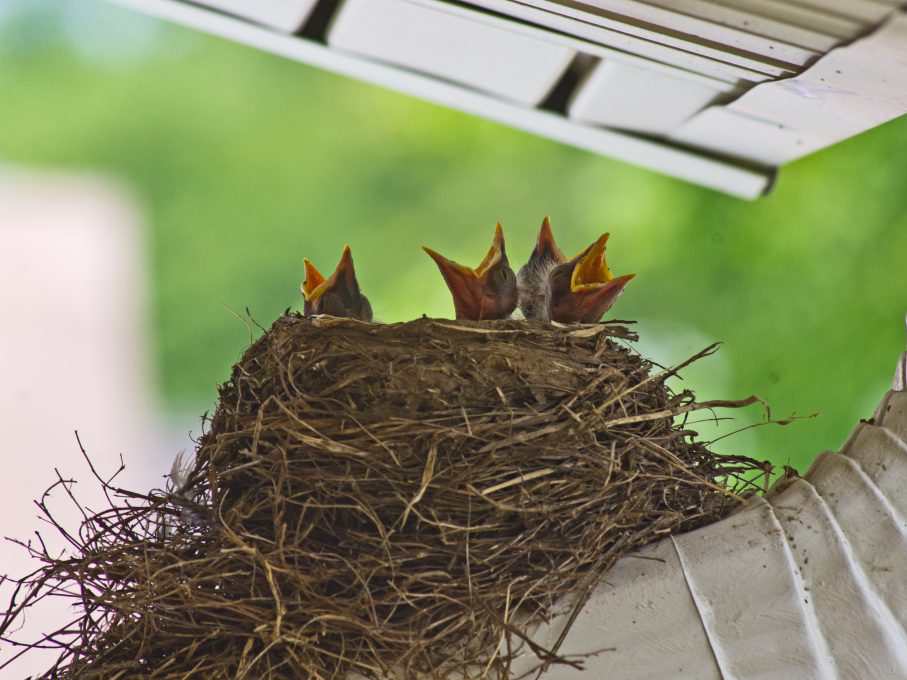
Example: Side-view
This side-view of an American Robin nest clearly shows a lack of plastic in the nesting material.
FAQs:
- Do you want photos and data from nests without plastic? Yes, absolutely! Monitoring and photographing nests without plastic is as important as those with plastic because we will be comparing nesting success between nests with and without plastic.
- Does it matter which nest visit I attach the photos to? You can attach your side- and top-view photos to any of the nest visits reported to NestWatch. Each nest visit submitted through NestWatch allows up to three photos to be attached, but you only need to submit each photo once.
- Is this a temporary study? Yes, this study is running for the 2026 nesting season. Depending on the results, we may extend or broaden its scope.
- I’ve never participated in NestWatch. How do I get started? There’s no better time to start, so welcome! We have put together a detailed explainer for how to get started with NestWatch, and also on how to attach photos to your nesting observations.
- What if I find the nest of a non-target species? You can still report it to NestWatch! NestWatch is a long-running participatory science program that has been accepting nesting observations from the public for more than 50 years, so your submissions of other species (with or without plastic) will still benefit science!
Please contact us with any questions. Thank you and happy searching!