
NestWatch Blog Posts
Blog
 No Nest Required
Whether for camouflage or parasite reduction, or due to cold weather or nest site competition, not building a nest can certainly have its perks. Meet five species that skip nest building.
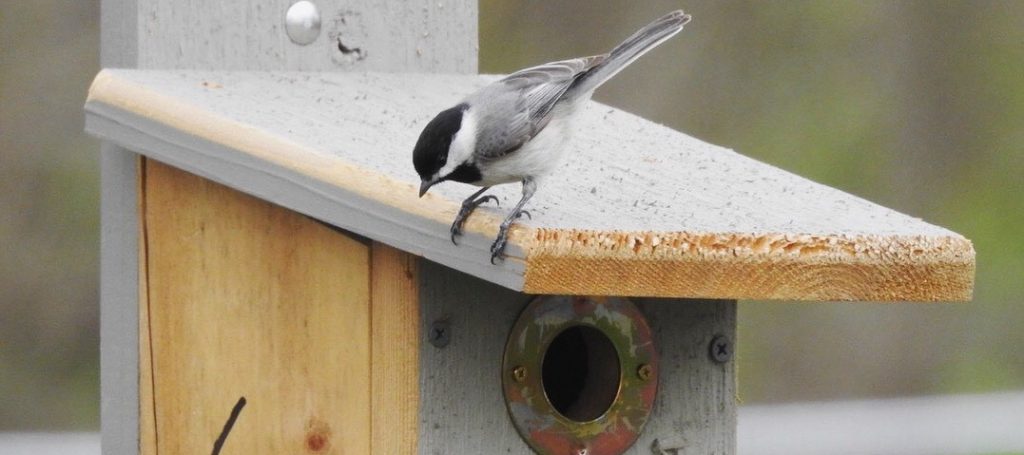 New Homes For Birds On The Walnut River
She may not be old enough to drive yet, but 14-year-old Katelyn Shelton didn’t let that stop her from creating a nest box trail in her neighborhood. A contributor to NestWatch, Katelyn shares her enthusiasm for birds and conservation as a guest blogger.
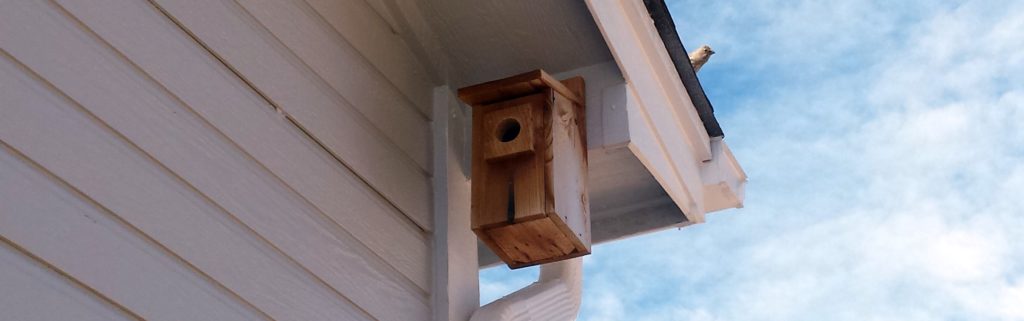 NestWatchers Document Rare Use Of Nest Boxes By House Finches
House Finches are known to nest around human habitations, but are only rarely documented using nest boxes. We spoke to two NestWatchers who have House Finches using nest boxes they monitor, and we share tips on what to look for if you think you might have them, too!
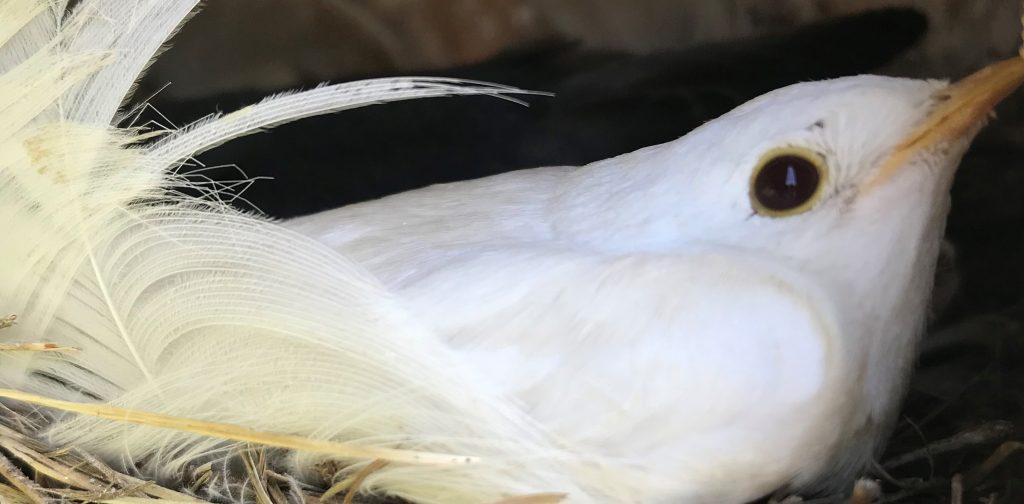 NestWatcher Finds Rare Albino Nestling
A NestWatcher discovers an albino Tree Swallow in a Massachusetts nest box. Fewer than one-half of a percent of all birds have this genetic condition.
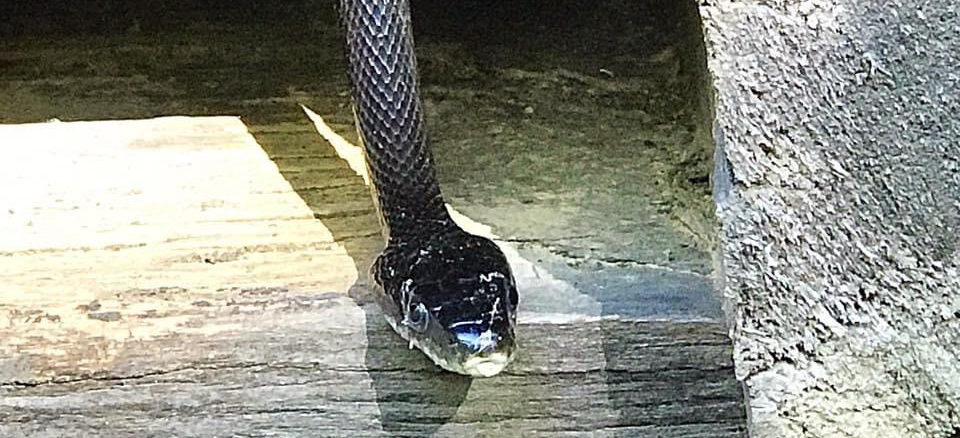 NestWatch Data Aid in Snake Study
The latest research paper to include NestWatch data is not your average avian study. Your data contributions were recently put to use in an examination of gray ratsnake climbing behavior. The study authors were interested in which factors correlate with ratsnake climbing forays, and they wondered if the timing of nests (and thus a seasonal abundance of eggs and nestlings) was an influence.
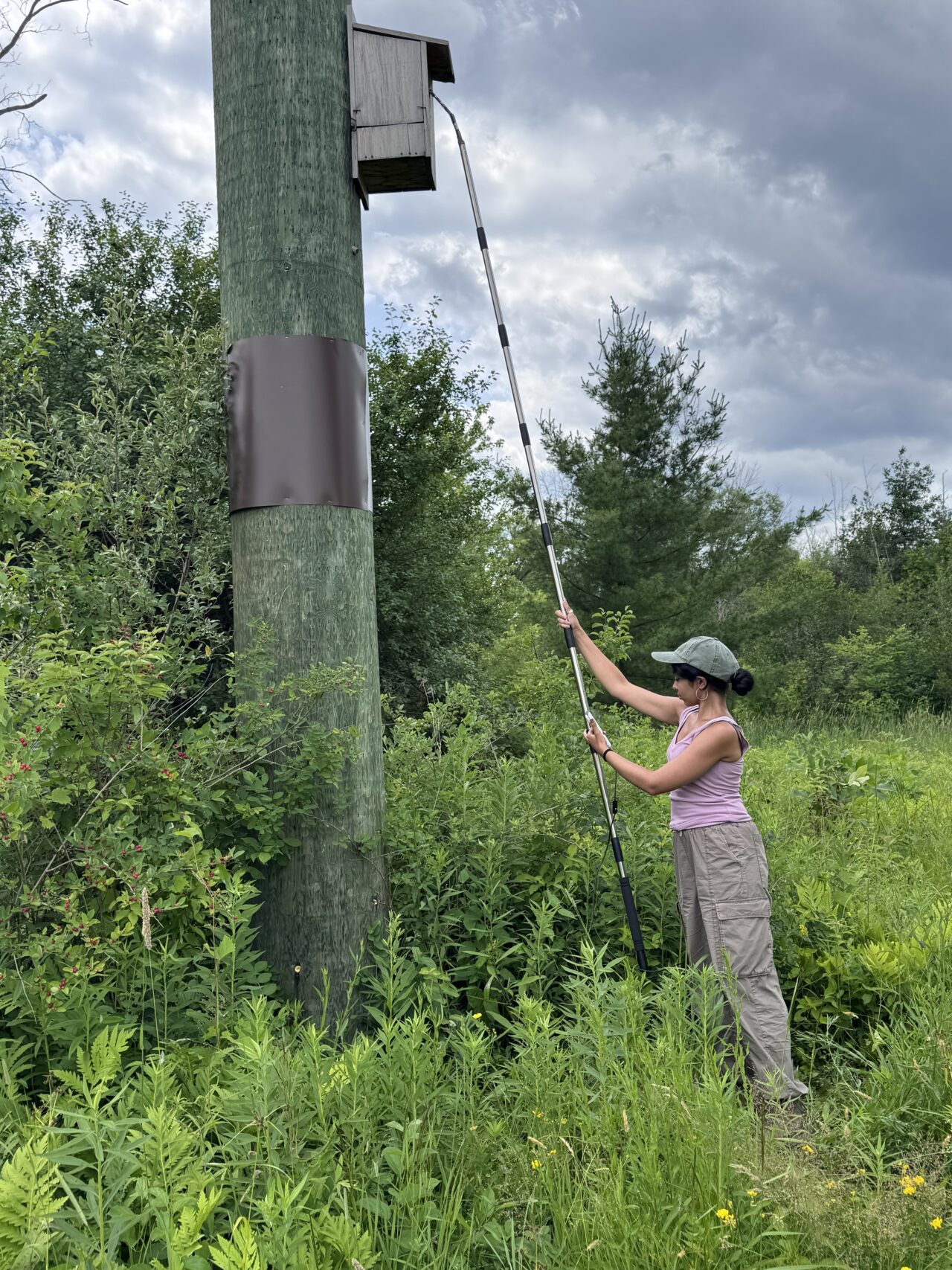 Monitoring hard-to-reach nest boxes? Try a camera pole!
Do you have nest boxes that are mounted too high to easily inspect without a ladder? In this month’s blog post, we outline some easy steps to make a DIY nest-checking pole which eliminates the need for a ladder during nest inspections. Lightweight, inexpensive, and easy-to-use, this DIY tool can be operated by one person.
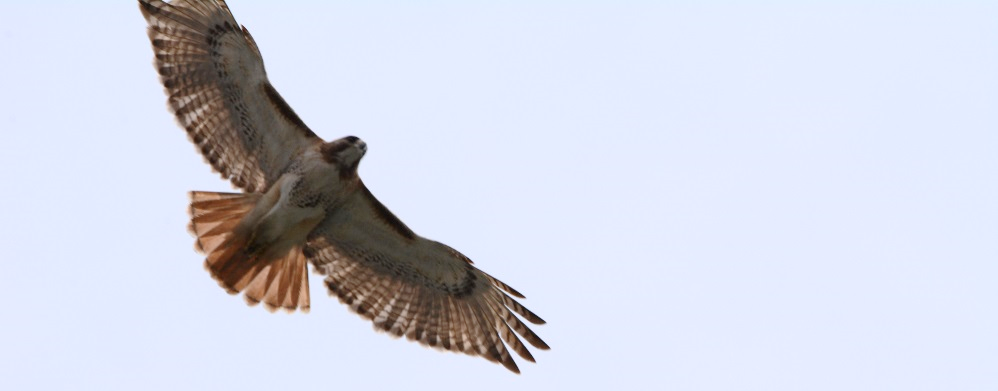 Monitoring Birds of Prey in New York City
In New York City, citizen scientists help urban hawks by contributing nest observations to the raptor nest monitoring project administered by NYC Parks’ Wildlife Unit. By contributing to NestWatch, these volunteers are helping to reduce secondary poisoning of birds of prey.
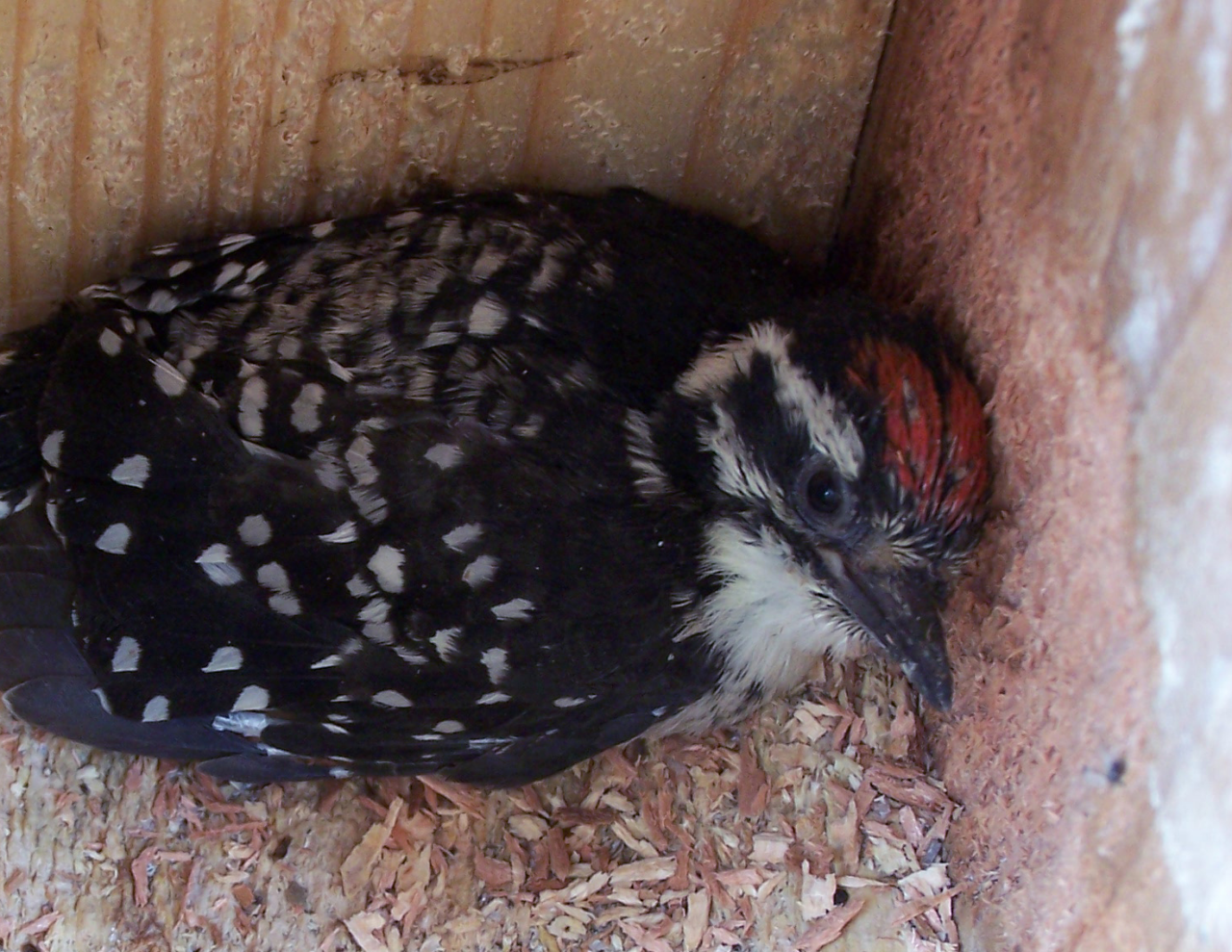 Meet the Nuttall’s Woodpecker, a Little-known Nester
This month we shine a spotlight on the often-overlooked Nuttall’s Woodpecker. Much about their breeding habits remains a mystery, creating a great opportunity for citizen scientists to contribute valuable insights. Discover what we still don’t know about Nuttall’s Woodpecker and how you can get involved in uncovering these mysteries.
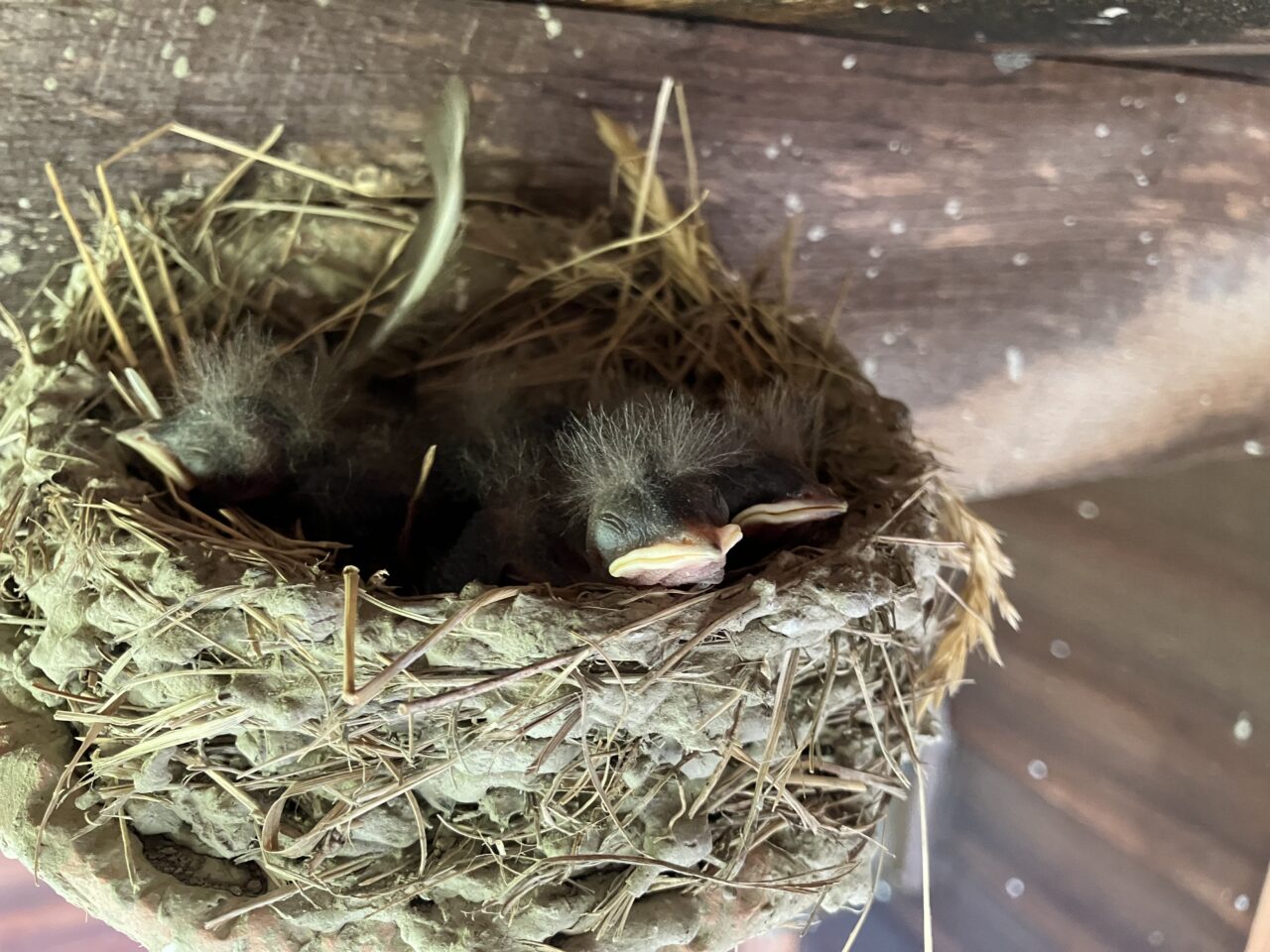 Making Space for Barn Swallows
The familiar Barn Swallow is an agile, active flier that nests in close association with humans. However, their numbers have been declining recently due to several factors. In this blog post, swallow conservationist Mara Silver shares some insights on how she helped resurrect a colony in a disused barn site.